“I do not feel any less of a woman. I feel empowered that I made a strong choice that in no way diminishes my femininity.”
– Angelina Jolie
A Brief History about that little Pink ribbon…

Breast Cancer Awareness Month did not begin until the year 1985. It started off as a partnership between the American Cancer Society and a pharmaceutical division of the Imperial Chemical Industries (now acquired by Dutch chemicals group Akzo Nobel, at £8bn in 2007). However, before that, guidelines for regular screenings were non-existent, there were no fundraising events or patient support groups and above all, the words breast and cancer were viewed as taboo.
A quick rewind in history to August 9th, 1974: With the Watergate scandal surrounding President Richard Nixon, his resignation transferred executive power to Vice President Gerald R. Ford. Ford suddenly became President of the United States and was sworn into office at the White House with his wife, Betty Bloomer Ford, by his side.
But the story here today, would be how Betty, the First Lady of the United States took Breast Cancer to center stage. Betty, just 7 weeks into her new role, faced an even greater challenge than her new responsibilities – she discovered a lump in her breast during one of her routine doctor’s visits. Instead of shying away from the fact, she decided to make headlines and openly shared her diagnosis and treatment journey with the media.
That was the beginning of the end for the silence surrounding breast cancer.

Fast forward to 1985: Betty Ford, then advocate and breast cancer survivor, was the face of the American Cancer Society-Imperial Chemical Industries initiative. The week-long event was the inception of the iconic Pink October Month that we still commemorate annually today. In 1992, when Estée Lauder cosmetics introduced the Pink Ribbon as a visual reminder of the Breast Cancer Awareness Month.
Pink Fact!
Evelyn H. Lauder, Estée Lauder’s daughter-in-law and her friend, Alexandra Penney were the women behind the creation of the iconic Pink Ribbon

Image Credit: Barbara Alperfor, The New York Times
Initially, the campaigns ran small, where the little pink bows handed out to women at department store makeup counters were largely funded by Lauder and her husband, Leonard. However, that ‘little pink ribbon’ gradually grew into a fundraising product and a reminder of breast health.
Breast Cancer Today
Breast cancer is the leading cause of cancer in women and in the world with over 2 million cases in 2018 (GLOBOCAN 2018). Breast cancer is the second leading cause of death in women after lung cancer. Mortality rates have since decreased owing to increased awareness and better treatments.
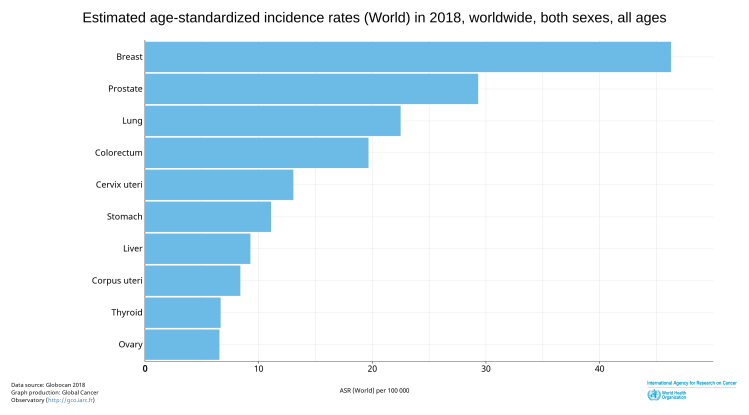
In contrast, age-standardized incidence rate (ASR) of breast cancer in Asia is only about 1/3 of that in the USA. Mortality rates for breast cancer (from highest to lowest), particularly in the East Asian region, are as follows (Shin et al. 2012):
- Malaysia (25%)
- Philippines (23%)
- Indonesia (22%)
- Singapore (20%)
- Japan (19%)
Pink Fact!
Men are also susceptible to this disease but only less than 1% of all breast cancer cases develop in men. Men carry a higher mortality rate than women, mainly because of the lower awareness among men and they are less likely to relate the lump to breast cancer therefore causing a delay in seeking treatment.
Delays in diagnosis in less developed regions, long waiting times and the belief in traditional or alternative therapies in some countries in South East Asia were some of the many reasons hampering timely and effective treatment of the disease. For example, in a study of 180 women in the northeast region of Thailand, researchers discovered that 17% of patients experienced a delay of more than 3 months before their first medical consultation, which merely encompasses their initial contact with a healthcare provider. This is compounded by the discovery that 42% percent of patients reported an even further delay of more than 3 months from their first medical consultation before receiving their diagnoses! (Poum et al. 2014)
Access to Care
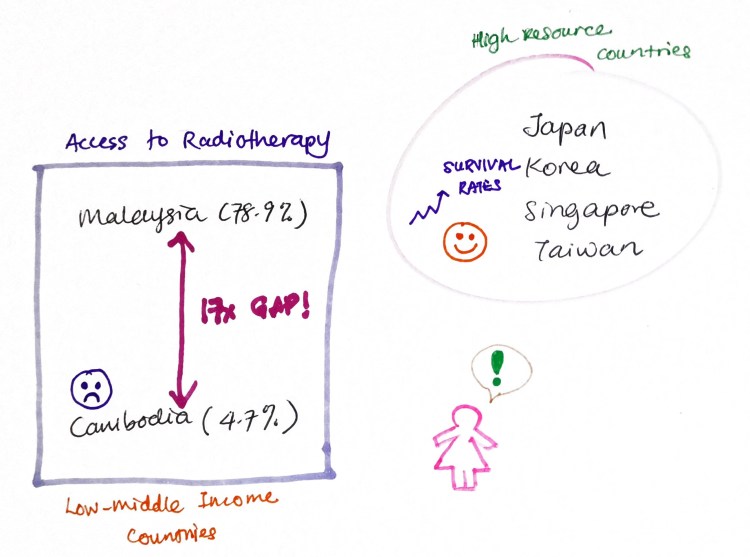
These challenges that patients face are further exacerbated in low-resource countries. Just imagine, access to radiation therapy in low-middle income countries (LMICs) like Cambodia (4.7%) is about 17 times much lower than that of Malaysia (78.9%) (Datta et al. 2014). Clearly, though surgical interventions are mostly available in low-resource settings, there is a gap when it comes to medical and radiation oncology services!
In contrast, neighbouring countries like Japan, Korea, Singapore, and Taiwan belonging to the high-resource Asian countries group, have well-established cancer control and cancer care systems. These countries though with high breast cancer incidences have relatively favourable breast cancer survival rates than their neighbouring counterparts (Yoo KY 2010).
Key Messages
Improving clinical outcomes will depend on early detection and timely treatment. However, even if these are made available, public awareness and education are also key to ensuring barriers to early detection and treatment are mitigated.
“The only thing we have to fear is fear itself. So the only thing to be really afraid of is if you don’t go get your mammograms.”
-Cynthia Nixon
So let us be committed – as a person, a husband, a brother or a father, a young lady, a senior, a mother or a sister, a medical professional or a social media influencer, whoever we may be; it is our responsibility to take ownership of our body, our health and also our loved ones around us. Because early detection saves lives. Because timely and optimal treatment are critical to survival. Most importantly, cancer doesn’t stop. So how can we?
Photo Collage of the KL Pink October event which I participated in 2019:

Her Majesty, Tunku Azizah Aminah Maimunah Iskandariah at the Pink October event in Kuala Lumpur (2019) 
Photo Booth Memories! 
Fighting the Pink Wave! 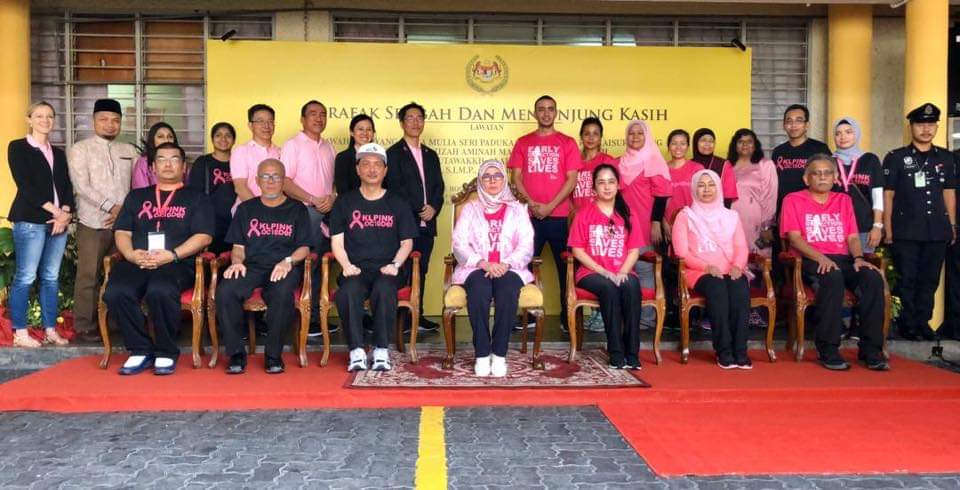


Dr Ros Suzanna, an amazing individual whom I have so much admiration for. A Clinical Oncologist by profession, an advocate for breast cancer and one of the pioneering members of the KL Pink October movement in Malaysia 

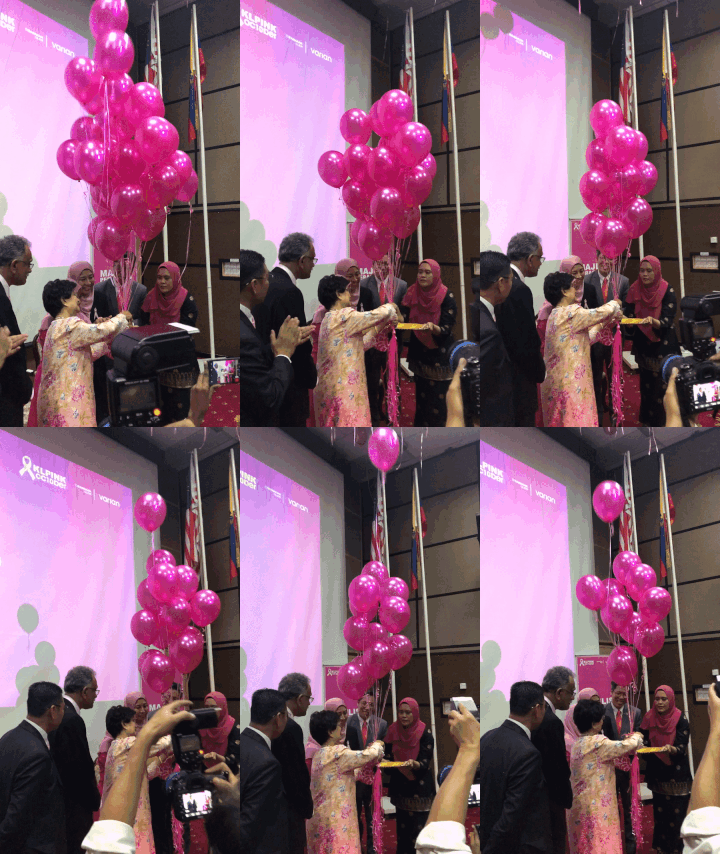
Tun Dr. Siti Hasmah binti Haji Mohamad Ali at the Pink October Grand Opening event. Dr Siti is also a breast cancer survivor. 
Her Majesty (bottom right), visiting cancer patients at the cancer wards in General Hospital Kuala Lumpur (2019) 
Together, We Beat Cancer! 
References:
Evelyn Lauder, founder of pink ribbon breast cancer campaign, dies aged 75
The First Lady Whose Legacy Outshines Her Husband’s
A Leading Lady
Current Status and Future Projections of Breast Cancer in Asia
Improving Breast Cancer Outcomes in Asia
Additional Resources:
National Breast Cancer Foundation
American Cancer Society
 Stephanie Loo
Keep the Breast cancer Awareness campaign going on forever.
Best wishes n morale supports to all those fighting the desease. 💪
LikeLike
Cancer doesn’t stop for Covid! Hope everyone still finds the chance to get screened or at the very least perform self-examinations, even in these trying time.
LikeLiked by 1 person