I’ve always been passionate and inquisitive about new things, particularly in my line of work – as a Radiation Therapist. In this role, we have to constantly be creative, quick to adapt, and all while ensuring patient safety is never compromised. For me, undertaking a Masters Degree was one way to expand my role, open doors to new opportunities and responsibilities; but above all, it was a move I made when I felt that I was ready.
If you are a budding clinical radiation therapist, a student contemplating which fork in the road you should choose, or perhaps a very experienced practitioner wanting to seek more in your career, maybe my thoughts on the matter may be worth its two cents.
But first, I would like to applaud you, for having that initiative – lest that thought remains only a flicker. May your inner drive fuel that thought into the inferno that propels your forward. After all, we must never stop moving. We’ve just got to keep going.
I am writing this in the hopes that I can inspire more radiation therapists out there to continue to buttress the prestige of this profession and to take ownership of this important role we play in the journey of our patients. I’m opposed to the idea of complacency, and I believe that we must do our very best to keep abreast with the current discourse in the Radiation Oncology space. Because by being relevant, current, and knowledgeable; we can work towards better clinical practices, increased quality in our patient care, and also garner respect from our fellow peers in the Radiation Therapy (RT) community.
“There is no wealth like knowledge,
and no poverty like ignorance.“
– The Buddha
My journey began when one day, I felt that there has to be so much more that I can contribute to the team and also to the patients that I serve day-to-day. I was thirsty for knowledge and also some form of guidance that I couldn’t get from my usual practice of reading medical journals. I wanted a teacher, a mentor who could give me more insight into the RT world.

Alas, I was torn between the two paths that lay ahead of me. I was conflicted if I should pursue a degree in Medical Physics or should I go down the RTT path? I am curious, dear reader. Placed in my shoes, which road would you have taken?

From Left: (Me), Keh, Joon, ZX, Lum
Deep down, I wanted to be a Medical Physicist. Believe me, my judgement was probably clouded with bias as I had the privilege to work with one of THE best team of medical physicists during my clinicals as an RTT. They were bright and capable individuals, and they worked cohesively as a team. Despite the long hours and high patient load, they kept their professionalism at the highest of levels and still had time for close friendships outside work. I would like to triple emphasize this one fact: this dream team never once withheld knowledge to me or to each other. They were always willing to teach and mentor newcomers, and were glad to answer anyone with questions.
This being said, I chose the path of the latter, and chose to master the ways of an RTT. This judgement was made with clarity after I sought advice from the Radiation Oncologist who brought me into this field in the first place – and his advise was one that I hope to relay to all RTTs who may be reading this.
“Neither path is better than the other, but if the MSc in Radiotherapy and Oncology can help you understand what you are meant to do, and how you can treat your patients better, you will be an asset to the cancer community and your profession.”
– Dr Joel and his thoughts on the path of the Radiation Therapist
Looking back, I have no regrets. I am proud to have kept on the path of the profession and I look forward to where this path may lead me. Believe me, it was no easy feat. If I could quote my Pop Pilates instructor, Cassey Ho, “Being comfortable is fine but digging into that discomfort allows you to become a stronger, better, smarter person“.
I mentioned wanting a mentor, but I soon realized that to succeed, I had to be MY OWN mentor. There was no handholding, or ‘spoon-feeding’; it was just myself, the assignments, and the deadline. The supervisors for each module only provided basic guidance and they mostly left the students to their own devices. I am not saying that this is bad, but this is what you should expect if you are pursuing a postgraduate degree.
To be honest, I struggled at the beginning, as I wasn’t sure what was required of me, and what was the benchmark to an ‘acceptable’ assignment considering the level of support that was provided. But then, I began to learn that we had to ask the ‘right questions’ and that we have to be resourceful. I still remember my first module vividly; I was utterly horrified when I received my results. That was when I knew that I needed a GAME PLAN and a STRATEGY in order to complete this course with flying colours.
- I learned to network with my peers, the students on the same course as I. I realised that exchanging feedback and ideas greatly improved my perspectives.
- YouTube was my digital tutor, allowing me to myself Biostatistics and how to use SPSS.
- I learnt that you can never read enough – and the more you read, the more you understand – and the better you become at critiquing professional journals and even your own essays.
- Your colleagues are your greatest assets! Speaking to your senior colleagues or friends who are experts in the field can really broaden your perspectives and help you think out of the box.
Sometimes, you feel like you are on a winning streak – when you succeed at modules that you enjoy. And well, life is life. It hits you when you least expect it to. During my Professional Practice Portfolio module, I hit rock bottom. And it was bad, like really bad. I could not relate to the aim of the module, and I found no excitement as I completed the assignments. I was angry at myself, and the frustration heightened as I saw my peers doing so much better than I did. I was at the bottom of the class, though I had so much support from the supervisor. But still, it was as if I was just hitting a brick wall, over and over. It got so bad that my partner (now husband!) would have to pull me to my laptop and coax me to keep at it.

I couldn’t recall when, but I managed to pull myself out of that hole and in time before the final submission for that module. I put in everything that I’ve got, did my due diligence and was shocked at the final result. Aced it – I did!! I even received a private email from the supervisor that he was extremely shocked when he received my completed assignment. He felt that “it was well deserved and it reflected on how you took the comments constructively and applied that on your final submission”.
So yeah, it was really blood, sweat and tears that led to the completion of the course and also the never-ending love and support from both family and friends. For me, learning is a never ending journey and I am looking forward to pursuing my postdoctoral studies when the time is right.
Personally, I think that if there has to be one reason why you would want to embark on this journey, is that you want to learn, learn, learn and not just to add more alphabets to the back of your name. With all this being said, one should also practice humility and generosity when it comes to knowledge sharing. Nothing is more beautiful than watching your peers that you have mentored rise and excel, and even more so if more patients can benefit from the good that you teach and preach.
“Share your knowledge.
It’s a way to achieve immortality.”
– The Dalai Lama
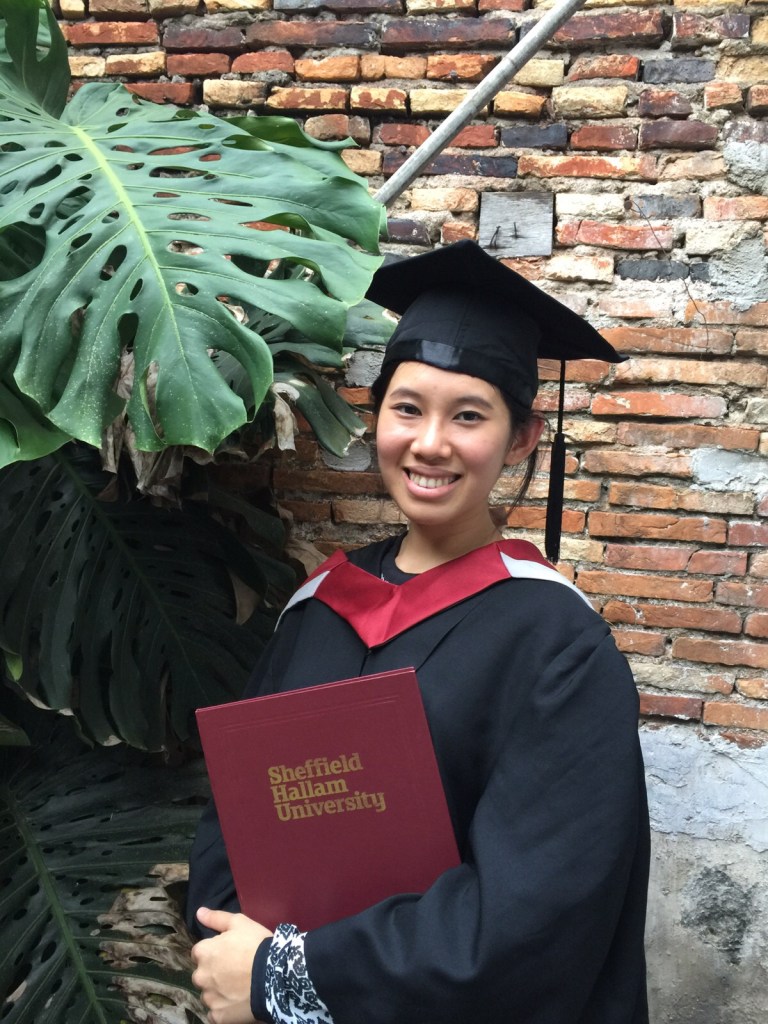
 Stephanie Loo
Keep going….. 💪
Your passions in learning will bring you to the next level of achievement.
LikeLike
very nice ..keep going.
LikeLike