
Author’s Note: Name(s) and examples used for the purpose of this 3-section blog post are entirely fictional and any coincidental representations are not intended. Opinions are the author’s own and must not be misconstrued as guidelines or medical advice.
Auntie Jen’s Patient Journey
In a brightly lit consultation room, Auntie Jen sat across Dr Culler with a grim look over her almond-shaped face. It was mid-day on a busy Tuesday workweek, and the hospital was abuzz with appointments; phone-calls ringing off the hook, and patients and their families waiting for their turn with their doctors. Even with all that commotion in the background, it was pin-drop silence for Auntie Jen when Dr Culler broke the news.
Cancer.
“Did the room just get a little bit smaller or the light a tad dimmer? Did someone just turn down the air-conditioning? Because it sure feels mighty chilly in here.”

Source: Pexels Free Graphics
“Breathe, breathe, breathe.”
After what seemed like hours to Auntie Jen, she finally mustered her strength to speak. To ask the most pertinent question over the gazillion of other questions shooting across her mind. As her voice quivered under her breath, she asked, “What happens next?”
Discussing Treatment Options
Now, you see – Dr Culler is a Consultant in Gynaecology (a doctor who specializes in the female reproductive system1) and has seen a whole lot of patients throughout his entire career; worked long, back-breaking hours through one surgery after another, prescribed countless treatment plans and medications, and broke bad news to so many patients and their families, one definitely could not keep count.
Dr Culler has seen many Auntie Jens. Enough Auntie Jens, in fact, to have them enrolled for the ongoing clinical trials in cervical cancer at his department.
Fortunately, Auntie Jen’s cancer is in its early stages and therefore the prognosis is favorable.
But if we were sitting beside Auntie Jen, and seeing Dr Culler, like Auntie Jen – for the very first time, how would we wish and hope for Dr Culler to respond?
- Based on the results that we have gathered, we are looking at some treatment plans for you and I will have my nurse arrange both chemotherapy and radiation therapy appointments for you soon.
- Well, there are a few options but based on published evidences, a combination of both chemotherapy and radiation therapy will be best suited for your diagnosis. Would you like to go through these options together and have me break them down for you?
Regardless of how medically-literate a patient may be, evidence has shown that good communication of health care providers can improve patients’ compliance with treatment and emotional adaptation2-3. In both the options above, Dr Culler definitely answered the question but it was in his response in #2 that he addressed Auntie Jen’s pain point.
The Pillars in Cancer Care
Auntie Jen is well-educated, tech-savvy, and like all of us, she could have easily Googled these treatment options on her smartphone in an instant. But having Dr Culler explain this to her in his own words, backed by his years of medical experience, does not just make communication more effective and impactful for Auntie Jen, but more importantly – a better patient experience.
The focus in my next blog post will be Auntie Jen’s experience in her Radiation Therapy treatment journey. As such, it will be vital to introduce you to the main pillars in cancer care before we delve deeper into Radiation Therapy as part of the cancer treatment continuum.

There are three Main Pillars in cancer care, namely Surgery, Chemotherapy and Radiation Therapy. These treatment options are usually performed in combination (a mix) and can come before, after, or even concurrently with one another during a patient’s course of treatment.
Surgery4, as most of us are probably familiar with is the removal of the tumour or mass from the affected area. In some cases, the entire mass can be removed. In other cases only a portion of the mass is removed instead (also known as debulking). In palliative treatments, surgery is also used to remove tumours that are causing pain or pressure.
Chemotherapy5 as the name suggests, is the use of chemicals (chemo-) or drugs administered into the veins of the patient. These drugs target cells that grow and divide quickly – such as cancer cells. However, unlike Surgery and Radiation Therapy which are more targeted to the area receiving treatment, these drugs will also affect other fast-growing healthy cells such as those in the hair, nails, intestines and bone marrow. Hence, patients undergoing chemotherapy may experience side effects like hair loss, nausea, and so forth.
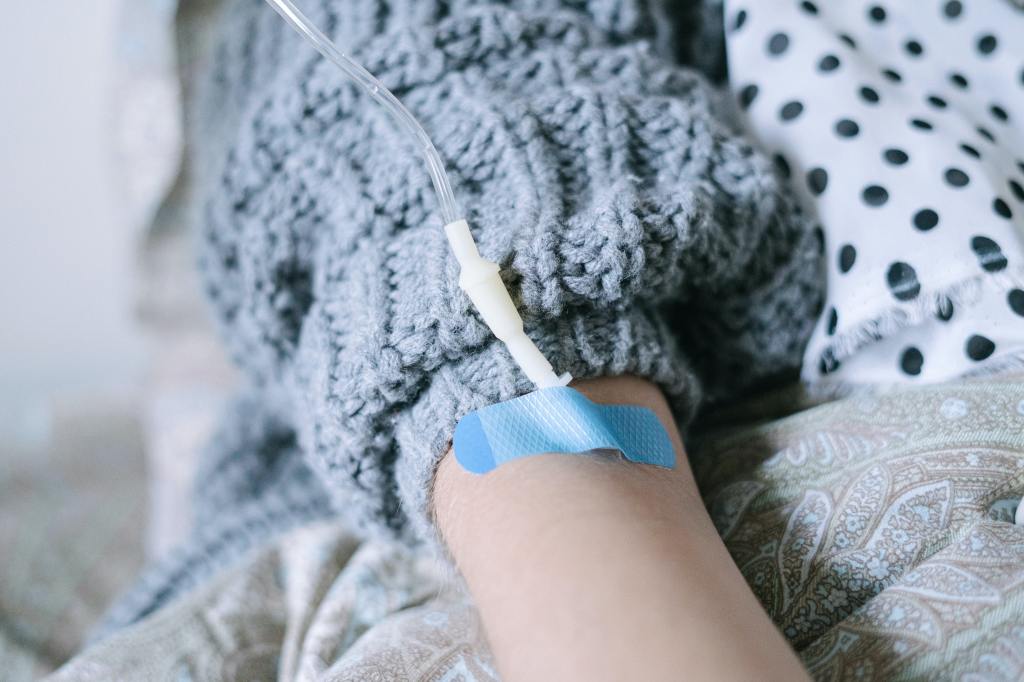
Image Source: Pexels Free Graphics
Radiation Therapy6 on the other hand, uses highly energized beams of radiation to destroy or shrink cancer cells. The term “Radiation Therapy” most often refers to external beam radiation, where these rays are being targeted to the tumour located in the patient’s body. These highly precise beams of radiation damage the cancer cells while sparing the surrounding critical organs. Radiation Therapy can be used to enhance the effectiveness of surgery and/or chemotherapy, prevent the spread of cancer and to alleviate pain.
The video below7 gives an idea of how external beam radiation therapy is being delivered:-
Footnote: The other form of radiation therapy which is administered internally (also known as Brachytherapy8) may come from a radioactive source or materials (such as radioactive seeds or pellets) placed into the body near the area to be treated. In order to avoid confusion, the focus on these next few blog posts will be on External Beam Radiation Therapy.
Through the surgical mask, Auntie Jen could feel the warm gaze and confidence that Dr Culler exudes in which calmed her. As she rose from her chair, Dr Culler gave a reassuring pat and said, “Don’t worry, we’ve got you”, before ushering her to the door. By now, Auntie Jen is exhausted, still in a state of shock, and all she wanted was to get home so she could have some time to think. As she closes the door behind her, Auntie Jen could feel another door re-opening.
With all that emotions set aside, Auntie Jen sees a glimmer of hope. Because now, she is determined and she is on a mission: a mission to Beat Cancer.
Part 2: Patient Communication in Radiation Therapy
Join Auntie Jen in the next blog entry where she will be communicating with a team of multidisciplinary health professionals to help her in her battle against cancer.
References:
1. WebMD. (2020). Breaking Bad News in Cancer Patients. PubMed Central (PMC). https://www.ncbi.nlm.nih.gov/pmc/articles/PMC4332125/
2. Konstantis A, Exiara T. Breaking bad news in cancer patients. Indian J Palliat Care. 2015;21(1):35-38. doi:10.4103/0973-1075.150172
3. Ptacek, J. T., & Ptacek, J. J. (2001). Patients’ perceptions of receiving bad news about cancer. Journal of clinical oncology, 19(21), 4160-4164
4. National Cancer Institute, USA. (2015, April 29). Surgery for Cancer. National Cancer Institute. https://www.cancer.gov/about-cancer/treatment/types/surgery
5. WebMD, & Brunilda Nazario, MD. (2021, February 8). Chemotherapy: How It Works and How You’ll Feel. WebMD. https://www.webmd.com/cancer/chemotherapy-what-to-expect
6. Mayo Clinic. (2020, July 1). Radiation therapy – Mayo Clinic. https://www.mayoclinic.org/tests-procedures/radiation-therapy/about/pac-20385162
7. Community Cancer Center. (2019, July 18). TrueBeam Advances in Radiotherapy [Video]. YouTube. https://www.youtube.com/watch?v=9TwzunV5JBE
8. Fairview. (2020). Brachytherapy Pellets [Image]. Brachytherapy for Cancer. https://www.fairview.org/patient-education/41373
 Stephanie Loo
Very informative n lots of good references for new Cancer patients.
Looking forward to the continuation….
LikeLike